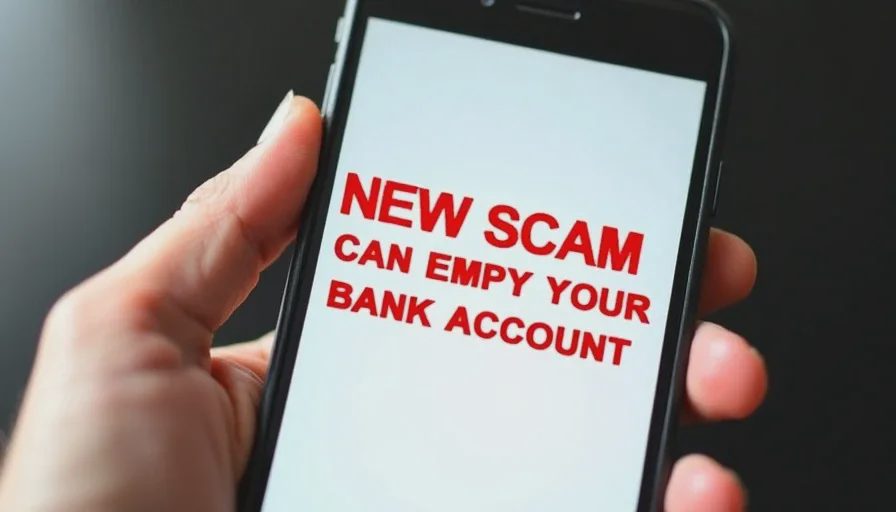
Last year, a headline crossed my feed that stopped me cold:
"NEW SCAM CAN EMPTY YOUR BANK ACCOUNT IN SECONDS — EVERYONE WITH A PHONE IS AT RISK!"
I clicked. My pulse was up. My jaw was tight. I was already mentally composing the text I'd send to my mom.
Then I started reading. And I realized: the article didn't actually describe a real, confirmed scam. It described a hypothetical vulnerability that had never been seen in the wild. No victim reports. No screenshots. No evidence that anyone had actually lost money this way. Just a theoretical possibility dressed up as an imminent threat.
That article got thousands of shares. It made people anxious. It made them forward warnings to their families. And it did absolutely nothing to help anyone stay safe — because it didn't tell them what to actually do.
That was the moment I made a rule for myself. A rule that guides every single post on this site.
If a piece of scam content starts with panic, it needs more proof before I'll publish it.
Why panic is a red flag
Panic feels urgent. It makes you act fast. That's exactly what scammers want from their victims. And it's also what low‑quality content creators want from their readers — shares, clicks, and attention.
When a headline screams "Everyone is at risk!" it's not doing you a favor. It's doing what scammers do: manufacturing urgency to bypass your judgment.
That doesn't mean all scam warnings are false. Some threats are genuinely widespread and serious. But the way the information is delivered tells you a lot about its reliability.
If the goal was to protect you, the content would give you:
A clear description of the scam's actual mechanics (not just a vague threat).
Real examples — screenshots, transcripts, or victim accounts.
Specific, actionable steps to prevent or respond to it.
A sober tone that respects your intelligence.
If the goal was to scare you, the content would give you:
Vague claims ("a new scam is sweeping the country").
No evidence — just "experts warn" or "authorities say" without names or sources.
An urgent demand: "Share this immediately!"
No practical advice — just anxiety.
I read dozens of scam articles a week. The ones that follow the panic‑first pattern are almost always the least trustworthy. They're not written to inform — they're written to virally spread.
My verification checklist
Before I write about any scam, I run it through a personal checklist. It's the same one I'd encourage any reader to use when they see a warning online.
1. Is there a real victim report?
I need to see at least one documented case — a police report, a BBB Scam Tracker entry, an FTC complaint, or a direct submission from a reader with a verifiable story. Without that, I'm just repeating rumors.
2. Can I find the scam script?
For me to write about it, I need to see the actual language scammers are using — a transcript, a screenshot, or a detailed description from someone who received it. That's how I identify patterns and tell you what to look for.
3. Do I understand the technical path?
I need to know exactly how the scam works: what the scammer does, what the victim sees, and where the money or data goes. If I can't map that, I can't explain it clearly.
4. Is the threat currently active?
Some scams are old and have faded. Others are brand new and spreading fast. I focus on active scams that people are encountering right now.
5. Do I have a clear, actionable takeaway?
Every post on this site must answer the question: "What should a normal person do with this information?" If I can't provide a specific next step — a check, a habit, a setting, a refusal script — I'm not done writing.
If any of these five points is missing, I don't publish. I wait, I research more, or I write about something else.
What I do when something breaks

When a new scam starts making the rounds, there's always a rush to be first. I've felt that pressure. I've seen other sites publish half‑baked warnings just to get the clicks.
My approach is slower. I'll wait until I have at least two independent reports. I'll collect the actual scam messages if I can. I'll test the links or the phone numbers myself (safely, with a burner device when needed).
By the time I write about it, I want to be able to say: "Here's what we know. Here's what we don't know yet. Here's what to do even if you're not sure."
That's not as exciting as a breaking‑news alert. But it's more useful. And that's the relationship I want with this site's readers.
The "share with your family" problem
One of the most common comments I get from readers is: "I want to send this to my parents, but I don't want to scare them."
That's a real tension. You want to warn the people you love, but you also don't want to make them anxious about every text message and every QR code.
My rule helps with that. When I write a post, I try to make sure it's shareable without shame or panic. If I can write a post that makes someone say, "This is useful, I'm going to forward it to my mom" without her feeling scared or stupid, I've done my job.
That's why I include checklists, step‑by‑step guides, and simple rules. Not because they're the only things people need — but because they're the things that survive the forwarding chain. A checklist doesn't panic. It empowers.
A reader story that changed my perspective
A few months ago, a reader emailed me about a scam that nearly got her. She was at a coffee shop, scanning a QR code for the menu, and the page asked for a credit card to "reserve a table." She stopped. She asked the barista. The barista said, "We don't do that." She closed the page.
Later, she told me she'd read one of my posts earlier that week — the one about QR codes — and it had made her pause.
She wrote: "Your article didn't make me afraid of QR codes. It just made me check. And that check saved me."
That's the goal. Not to eliminate risk — you can't. Not to make you distrust everything — that's exhausting. But to give you a small, automatic check that catches the bad stuff before it gets you.
My promise to you

On this site, you won't see:
Headlines with multiple exclamation points.
Vague claims about "new scams" without evidence.
Pressure to "share immediately before it's too late."
Blame for people who get scammed.
Recommendations without testing or clear reasoning.
You will see:
Clear descriptions of real threats.
Screenshots, transcripts, and examples.
Practical, step‑by‑step advice.
A calm tone that respects your intelligence.
Honesty about what we know and what we don't.
It's a quieter kind of content. I think it works better.
One final thought
Panic is a feeling, not a strategy. It makes us react, but it doesn't make us think. And when it comes to scams, thinking is the only real defense.
So when you see a headline that makes your heart race — from any site, including this one — take a breath. Ask yourself: Where's the proof? What's the actual risk? What should I actually do?
If the answers aren't clear, the headline might be doing more harm than good.
Slow the click. Slow the scroll. And know that you'll always get a full, honest picture here — panic not included.
No letters yet.