Fake bank text message examples 2026 are useful because scam scripts keep changing while the pressure tactics stay familiar. A message may claim your debit card was locked, a payment needs approval, or your account will close unless you act immediately. The goal is not to inform you. It is to rush you past your normal judgment and into a fake login page, a phone call with a scammer, or a payment you did not authorize.
The safest first move is simple: slow the click. Do not use the link or phone number in an unexpected bank text. Open your bank's official app, type the bank's website into your browser, or call the number printed on your debit card.
Fake bank text message examples 2026 and the pressure script
One common message says, “Bank Alert: We detected unusual activity on your checking account. Verify now to avoid suspension: [link].” Another says, “Did you attempt a $642.18 purchase at an electronics store? Reply YES to secure your account.” A third may claim, “Your new security device is being added. If this was not you, cancel here.”
These fake bank text message examples 2026 use three emotional triggers: fear of losing access, fear of unauthorized charges, and fear that someone is already inside the account. The exact dollar amount or wording is less important than the requested action. A real fraud alert can happen, but you can verify it independently. A trustworthy bank does not need you to prove your identity through a random text link.
Here is where the pressure enters the script. The message gives you a short deadline, uses official-sounding language, and presents one convenient button. It may include the bank's logo, a familiar short code, or the last four digits of an account. Those details can be copied, spoofed, or obtained from old data leaks. They are not proof that the message is genuine.
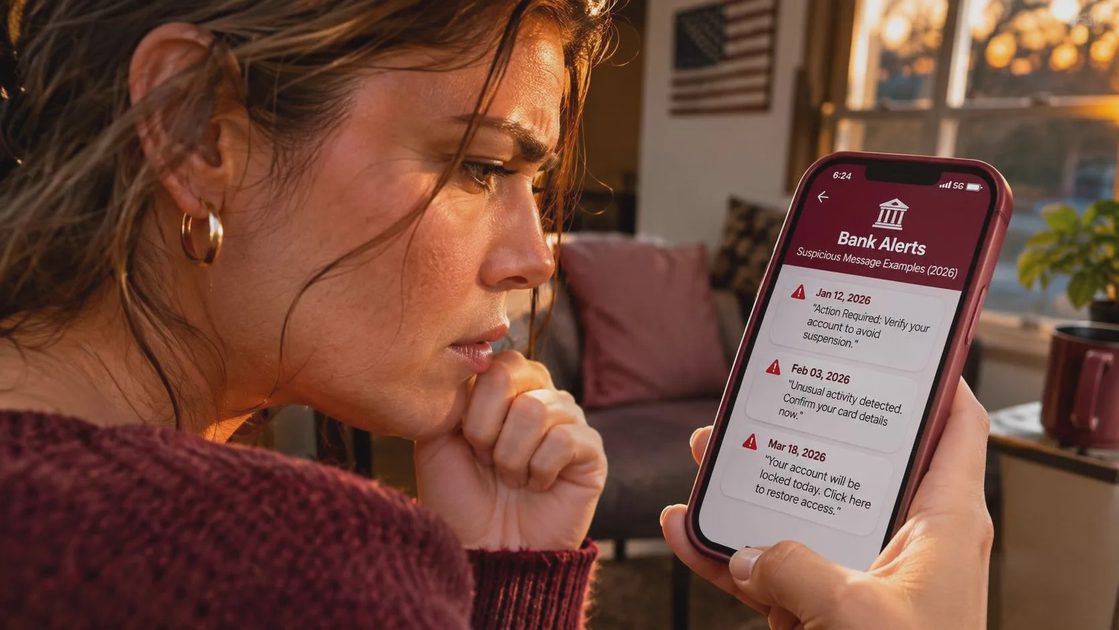
How to examine a suspicious bank text
Start with the sender, but do not stop there. Scammers can make a message appear in the same conversation thread as legitimate bank alerts, and sender IDs can be spoofed. A familiar name does not make the text safe.
Next, inspect the link without opening it. On a computer, you can hover over it. On a phone, do not press and hold if that action could open the page; instead, use the bank's official app or website separately. Look for strange domains, extra words, misspellings, or a web address that has nothing to do with your bank. A secure padlock alone is not enough because scam websites can use encryption too.
Pay attention to the requested information. A bank will not need your complete password, one-time verification code, debit card PIN, or Social Security number through a text conversation. If a caller or texter asks for a code that just arrived on your phone, treat that as a major warning. The code could let the scammer enter your account while you are still speaking with them.
These fake bank text message examples 2026 also show why replying can be risky. Even a response such as “STOP” tells the sender that a real person uses the number. For suspicious financial messages, report the text through your carrier's spam process and delete it after preserving a screenshot.
What happens after you tap the link
The first page may look polished. It can copy a bank's colors, sign-in layout, legal footer, and security language. You may be asked for a username and password, followed by a security code. The page may then display a fake loading screen while the scammer uses your information on the real banking site.
Some campaigns take a different path. The link opens a fake support page with a phone number. The person who answers may say the account is under attack and instruct you to move money to a “safe” account. That account belongs to the criminal. No legitimate bank employee should tell you to protect funds by sending them to a stranger, purchasing gift cards, depositing cash into a Bitcoin ATM, or sharing a verification code.
A scammer may also ask you to install remote-access software. That can give the person visibility into your screen and control over your device. Close the page, uninstall unfamiliar software, and contact the bank through a verified channel instead.
If you entered a password, change it immediately from the official app or website. Change it anywhere else you reused it, especially email, payment apps, and shopping accounts. If you gave away a one-time code or approved an unexpected login, tell the bank exactly what happened so it can secure the session and review transactions.
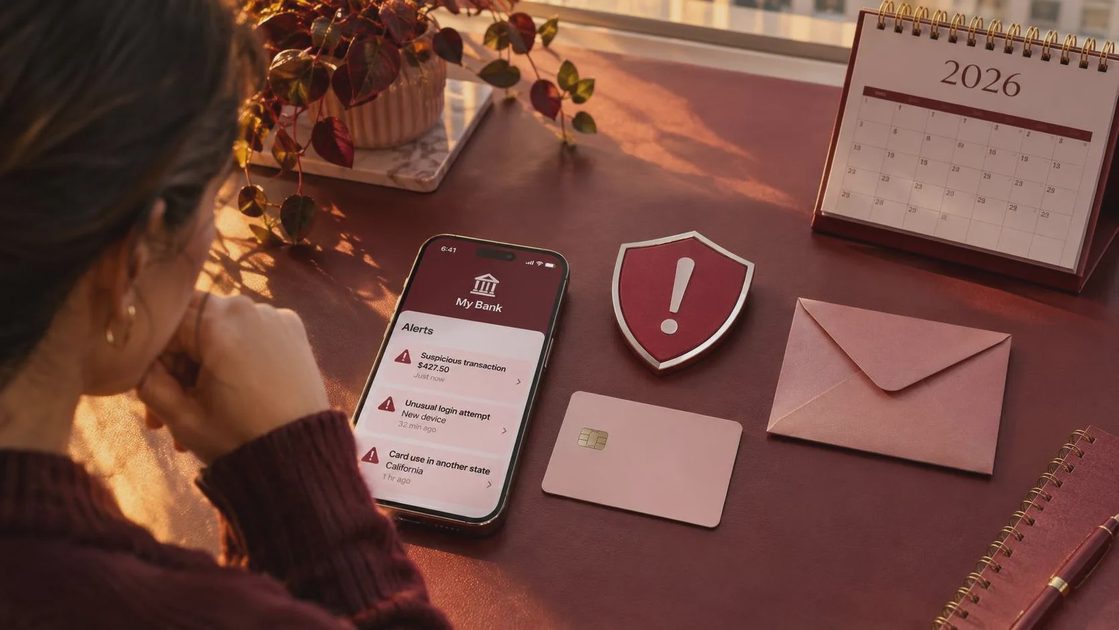
What to do if money or account information was exposed
Call the bank's fraud department using the number on your card or an official statement. Ask whether the account needs a password reset, new debit card, temporary lock, or transaction review. Write down the date, time, representative's name, and any case number. Fast reporting can improve the bank's ability to stop or investigate unauthorized activity, although recovery is never guaranteed.
Check recent transfers, card purchases, Zelle activity, and linked external accounts. A small test charge can come before a larger withdrawal. Review your email account too, because a scammer with access to email may try to intercept password resets or hide bank alerts.
For identity information, consider placing a fraud alert or security freeze with the major credit bureaus. A freeze is free and restricts new creditors from accessing your credit file until you lift it. If your Social Security number was involved, use IdentityTheft.gov for federal guidance and a recovery plan. Save screenshots and the original message rather than forwarding the scam to friends.
A calmer routine for future alerts
Create your own verification habit before the next message arrives. Keep your bank's official phone number in your contacts, enable transaction notifications inside the banking app, and use a unique password protected by multifactor authentication. App-based authentication or a hardware security key can be stronger than text codes when those options are available.
Tell family members one rule: no financial decision made from an unexpected text is urgent. If a parent receives a frightening alert, ask them to read it aloud while you open the bank's app separately. This removes the scammer's preferred handoff from message to fake page.
The useful lesson from fake bank text message examples 2026 is not memorizing every sentence. It is recognizing the pattern: surprise, alarm, a link or phone number, and a request for credentials or money. If the message wants speed, you want distance. Close it, verify through a trusted channel, and report it. Slow the click before the scam gets your information.
No letters yet.