
Becoming a new parent is exhausting, beautiful, and terrifying all at once. You're sleep‑deprived, you're flooded with advice from every direction, and you're suddenly visible in ways you never were before — on baby registries, in Facebook mom groups, on marketplace apps, and through a cascade of automated pediatric appointment texts.
Scammers know exactly when you're most vulnerable. They target new parents because you're tired, trusting, and often sharing personal details without thinking twice. You're also desperate for help and community, which makes you more likely to click a link that promises a free diaper sample, or reply to a message that seems to come from your doctor's office.
In this guide, I'm walking through the nine most common scams that hit new moms and dads — and how to shut them down before they cost you money, data, or peace of mind.
The nine scams that target new parents
1. Registry phishing
You create a baby registry on Amazon, Target, Buy Buy Baby, or Babylist. Suddenly you start getting emails, texts, and DMs that say:
"A generous gift has been sent to your registry! Click here to claim it."
Or:
"Your registry has a duplicate item. Confirm your address to avoid shipping delays."
What's really happening: Scammers scrape public registry information (names, due dates, even addresses) and send fake gift notifications. The link takes you to a page that steals your login credentials or credit card details.
How to protect yourself:
Never click a registry-related link that arrives unsolicited. Instead, open your registry app or website directly to check for gifts.
Make your registry private if possible, or set it to require a password for viewing.
Ignore any message that asks for "address confirmation" — the store already has your shipping address.
2. Marketplace baby‑item scams
You list a stroller, crib, or baby swing on Facebook Marketplace or Craigslist. Within minutes, you get a message from a "buyer" who says:
"I'll take it! I'm sending you a payment via Zelle/Venmo. I'll also send a courier to pick it up. Just give me your email for the payment confirmation."
Then you receive a fake email from "Zelle" or "Venmo" saying you need to pay a "business account upgrade fee" to receive the money. Or the buyer sends you an overpayment check and asks you to refund the difference via gift cards.
What's really happening: The payment emails are fake. The courier never arrives. You're out the item and possibly real money if you send the "refund."
How to protect yourself:
Cash in person, face‑to‑face, is the safest.
If you accept digital payment, only use the app's built‑in transfer feature — never share your email for "confirmation."
If a buyer offers to pay more than asking, it's always a scam.
Never send gift cards to anyone.
3. Fake baby‑product "free samples"
You see an ad on Instagram or Facebook: "Free baby box filled with diapers, wipes, and onesies — just pay $2.99 shipping!" You click, enter your credit card for shipping, and receive nothing — or a cheap trinket that cost pennies. Meanwhile, your card is now enrolled in a monthly subscription that charges $30 a month until you cancel.
What's really happening: These are subscription traps. The "shipping fee" is the hook, but buried in the fine print is a recurring charge.
How to protect yourself:
Stick to well‑known sample programs like Amazon Baby Registry Welcome Box, Target Welcome Kit, or Similac/Enfamil rewards.
Before entering payment info, search the company name + "scam" or "review."
Use a virtual credit card or Privacy.com to create single‑use numbers for unknown merchants.
4. Pediatric appointment confirmation scams
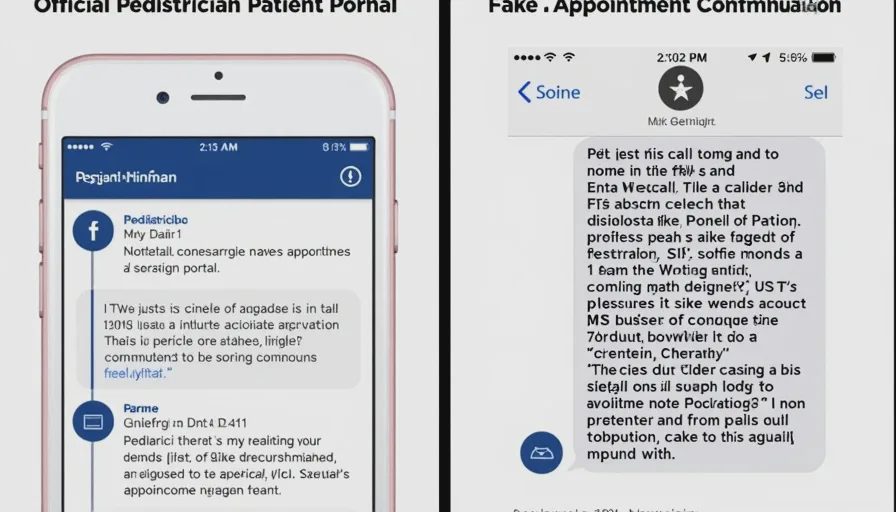
You just scheduled your baby's 2‑month checkup. A few days later, you get a text:
"Pediatric Partners: Your appointment has been moved to tomorrow. Confirm your insurance details at [link] to avoid a cancellation fee."
Or:
"Reminder: Your child's vaccination records need to be updated. Click here to verify."
What's really happening: Scammers monitor public data breaches to get your phone number and pregnancy/birth info. They send these texts hoping you'll panic about missing an appointment and click the link to enter insurance or payment details.
How to protect yourself:
Call your pediatrician's office directly using the number you already have — never the number in the text.
Use the patient portal app you already have installed, not a link sent via SMS.
No clinic will cancel an appointment due to unverified insurance via a text link.
5. Social media "mom group" phishing
You join a private Facebook group for moms due in the same month. A member posts a link to a "free weekly development guide" or "exclusive discount at a baby store." You click, enter your email, and start getting inundated with spam — and sometimes, more targeted scams.
What's really happening: Scammers infiltrate these groups and post links that either steal your email (which they sell) or lead to fake login pages.
How to protect yourself:
Be cautious of posts from members you don't recognize, especially ones with links.
Look at the poster's profile — if it was created recently, has few friends, or generic photos, report them to the group admin.
Never enter personal info on a page you reached from a group link.
6. Delivery "baby gift" scams
You're expecting packages from relatives. A text arrives:
"UPS: A gift package addressed to your baby is waiting at the depot. Please pay $1.98 release fee."
What's really happening: Same as the delivery scams I covered earlier, but now tailored to new parents who are flooded with incoming shipments.
How to protect yourself:
Track all expected gifts using the tracking numbers provided by the senders.
Never click a delivery link you didn't specifically request.
No carrier charges customs fees via SMS.
7. WIC / Medicaid / benefit phishing
You've applied for WIC or Medicaid. A call or text appears:
"Your benefits have been placed on hold. Verify your Social Security number to reactivate."
What's really happening: Government programs don't call or text you asking for your SSN or bank details. This is identity theft in the making.
How to protect yourself:
Hang up and call your caseworker directly using the official number on your approval letter.
Never share your SSN, birth date, or bank info over the phone with an unsolicited caller.
8. Paid "new mom survey" scams
You receive an email: "Take this 5‑minute survey about new moms and earn a $50 Target gift card." You answer a few questions, then they ask for your credit card to "verify you're over 18" or to "cover a small shipping fee" for the gift card.
What's really happening: The survey is a data‑harvesting tool, and the "fee" is a credit card grab. You get neither the gift card nor a refund.
How to protect yourself:
Legitimate market research pays modestly but never asks for payment or sensitive financial info.
If a survey asks for card info, close it immediately.
9. "Urgent" pediatric vaccine information
This one preys on parental anxiety. A text or email:
"CDC alert: Your child's vaccine batch has been recalled. Click here to check if your baby is affected."
What's really happening: It's a scare tactic to get you to click a link and enter personal info or download malware.
How to protect yourself:
The CDC and your pediatrician will contact you via official channels — not random texts.
Go to the CDC website directly (cdc.gov) or ask your pediatrician at your next visit.
Never click a link about vaccine recalls sent from an unknown number.
One core rule for new parents
If a message about your baby arrives unsolicited, and it asks you to click a link or share personal info, treat it as suspicious — no matter how official it looks.
You're in a season of life where you're constantly verifying things: feedings, sleep schedules, diaper changes. Adding one more verification step — checking the source before you tap — will protect you from almost all of these scams.
What to do if you've already fallen for one
New parents are busy and exhausted. If you clicked a link and entered info:
If you entered credit card details: Call your card issuer and report it as compromised. Request a new card number.
If you entered your password: Change that password immediately, and anywhere else you use it.
If you downloaded an app or file: Delete it and run a security scan on your device.
If you shared your SSN or bank account: Contact your bank and place a fraud alert with the three credit bureaus (Equifax, Experian, TransUnion).
Then, forgive yourself. You're doing a hundred things at once. This one click doesn't make you a bad parent — it makes you a human one.
How to talk to other new parents
This guide is useful for you, but it's even more valuable if you share it with your partner, your friends, and your mom group. Scammers thrive on silence and isolation. When parents talk to each other about these tricks, the scams lose their power.
Consider making a quick pact with your partner: "If either of us gets a message about the baby that asks for money or personal info, we'll confirm with each other before doing anything."
That simple agreement buys you time — and time is exactly what scammers don't want you to have.
Tomorrow in Behind the Prompt, I'll share three reader stories that explain why "I'd never fall for that" is a dangerous mindset. Sometimes the best defense is humility.
Later this week in Tool Check, I'll answer the question: Are phone cleaner apps actually useful, or just subscription theater? I spent a week testing them so you don't have to.
No letters yet.